Making the decision to enroll your child in preschool is one of the most significant steps you’ll take in their early life. It’s an exciting time, but it can also feel overwhelming. In a vibrant and growing community like Fort Myers, you have many excellent options, each with a different approach to early childhood education. How do you sort through them all to find the perfect fit for your child and your family?
This guide is designed to empower you with the knowledge and tools you need to make an informed decision. We’ll go beyond a simple checklist and dive deep into the key factors that define a quality early learning experience, from educational philosophies to the crucial details of safety and communication. By the end, you’ll feel confident in your ability to choose a preschool that lays a strong foundation for your child’s future success.
Understanding Educational Philosophies: It’s More Than Just Play
One of the first things you’ll encounter on your search is a variety of educational philosophies. These aren’t just fancy names; they are the core beliefs that shape how a school teaches. Some programs are heavily focused on academic preparation, while others prioritize learning through play. The best choice is the one that aligns with your family’s values and your child’s personality.
A play-based philosophy, for example, views play as a child’s natural way of learning. In this environment, children explore, experiment, and solve problems through hands-on activities. Teachers act as guides, facilitating learning moments as they arise. This approach is fantastic for fostering creativity, social skills, and a lifelong love of learning.
On the other hand, some preschools use a more structured, academic-focused approach. These programs often have a more formal curriculum that introduces core subjects like literacy and math in a classroom setting. This can be a great fit for a child who thrives in a structured environment and for parents who want to see a clear path to kindergarten readiness.
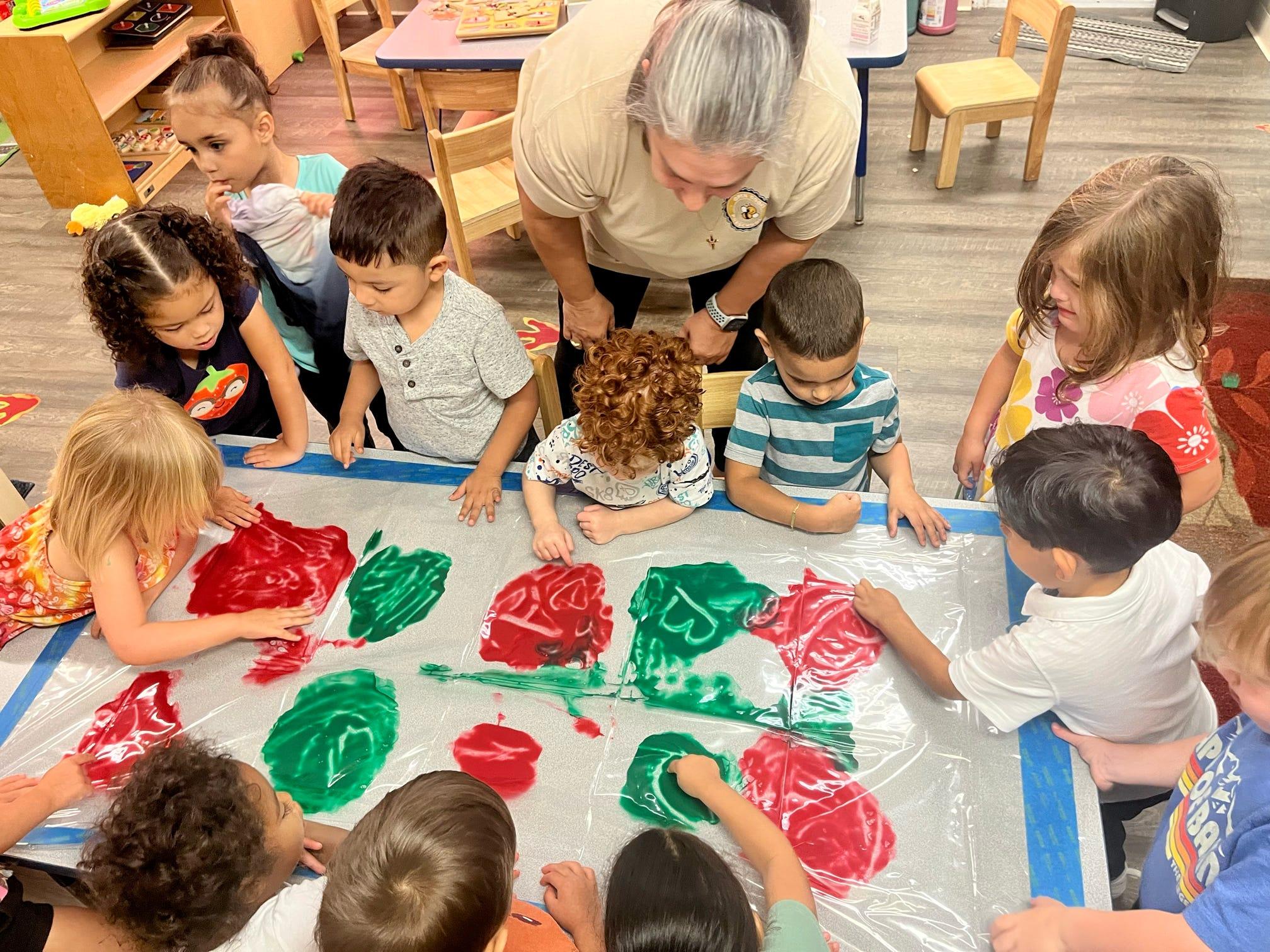
There are also blended approaches, such as the one found at Open Doors Preschool. Our “Learning Beyond Paper” curriculum is a comprehensive, education-based program that intentionally blends learning and fun. This approach ensures children develop crucial cognitive, social, and physical skills in an environment that feels joyful and engaging, not rigid.
The Importance of Licensing and Accreditation
Before you even step foot into a preschool, you need to verify its credentials. In Florida, all child care facilities must be licensed by the Department of Children and Families (DCF). This license means the program meets the state’s minimum health and safety standards. This is the absolute first box you should check.
Beyond a state license, a school may also hold voluntary accreditation. Accreditation is a rigorous process where a program is evaluated by an independent agency against a set of standards that often exceed state requirements. For example, a “Gold Seal Accredited” preschool, like Open Doors Preschool, has been recognized for providing a level of care and education that is considered to be of the highest quality.
Accreditation is a strong indicator of a school’s commitment to excellence. It signals that the facility has gone the extra mile to ensure its teachers are qualified, its curriculum is sound, and its environment is safe and nurturing. While it is not a requirement, choosing an accredited program offers an extra layer of peace of mind.
Safety First: A Non-Negotiable Criterion
Nothing is more important than your child’s safety. When you tour a preschool, be observant. Look for secure entrances, monitored access to the facility, and well-maintained indoor and outdoor spaces. Ask detailed questions about their safety protocols, including emergency procedures, pick-up/drop-off policies, and how they handle visitors.
Another critical safety measure is background checks. Reputable preschools will conduct thorough background checks on all staff and volunteers who have contact with children. This is a state requirement in Florida, and you should feel comfortable asking a director about their specific process.
Finally, inquire about health and hygiene practices. A quality preschool will have clear policies for sick children, regular cleaning schedules for toys and surfaces, and proper handwashing procedures. These seemingly small details are essential for keeping all children healthy and minimizing the spread of germs.
Staff and Teacher Qualifications
The teachers are the heart of any preschool. Their experience, training, and genuine passion for early childhood education will have a direct and lasting impact on your child’s development. Don’t be shy about asking about the qualifications of the staff.
In Florida, child care personnel must complete a mandatory 40-hour introductory training. However, the best programs often go far beyond this minimum. Look for teachers who have specialized training in early childhood education, have earned degrees in related fields, or are dedicated to ongoing professional development.
At Open Doors Preschool, we are proud of our experienced and loving teachers. They are certified professionals who use their expertise to create a nurturing environment where children feel safe, seen, and supported. A low child-to-staff ratio is also a key factor, as it ensures each child receives the personalized attention they need to thrive. Florida mandates certain ratios, but a school with a lower ratio than the state minimum demonstrates a commitment to individualized care.
The Curriculum and Daily Routine
A great curriculum provides a framework for learning while remaining flexible enough to respond to the unique needs of each child. Ask for a sample daily schedule and a summary of the curriculum. What does a typical day look like? Is there a balance of structured and unstructured time?
A well-rounded curriculum should incorporate a variety of activities that support holistic development. This includes:
- Cognitive development: Activities that foster early literacy, math, and problem-solving skills.
- Social and emotional development: Opportunities for sharing, cooperating, and expressing feelings in a healthy way.
- Physical development: Time for both fine motor skills (e.g., drawing, building with blocks) and gross motor skills (e.g., running, jumping, playing on the playground).
- Creative expression: Art, music, and imaginative play are vital for a child’s development.
At Open Doors Preschool, our curriculum is intentionally designed to support all of these areas. From circle time and art projects to free play and music, every moment is an opportunity for learning and growth.

Communication and Parent Partnership
The relationship between a preschool and a family should be a partnership. You are your child’s first teacher, and a great school will respect and involve you in their educational journey. Ask about their communication practices. How will they keep you informed about your child’s day? Do they provide daily reports, use a communication app, or have regular parent-teacher conferences?
Open and frequent communication is a sign of a healthy school environment. It allows you to feel connected to your child’s experience and gives you the opportunity to reinforce what they are learning at school at home. It also ensures that any concerns or questions you have can be addressed promptly and effectively.
Finding the Right Fit
Ultimately, the best way to choose a preschool is to see it for yourself. Schedule tours at a few different schools. During your visit, pay attention to the atmosphere. Do the children seem happy and engaged? Are the teachers attentive and warm? Trust your gut feeling.
As you compare your options, consider factors like location, hours of operation, and tuition. The Early Learning Coalition of Southwest Florida is a valuable resource that can provide information on local programs and potential financial assistance.
Choosing a preschool is a significant step, but by focusing on these key factors, you can find a program that not only meets your child’s needs but also gives you confidence and peace of mind. We invite you to explore the difference that a loving, accredited, and comprehensive early learning program can make.
Conclusion
Your search for the perfect preschool in Fort Myers, FL, is a journey of discovery. It’s about more than finding a place for your child to go during the day; it’s about finding a community that will nurture their potential and set them up for a lifetime of learning. By prioritizing educational philosophy, licensing and accreditation, safety, qualified staff, curriculum, and strong communication, you can confidently make a choice that is right for your family.
At Open Doors Preschool, we are dedicated to providing an exceptional early learning experience. Our commitment to excellence is reflected in our Gold Seal Accreditation, our loving and experienced teachers, and our comprehensive curriculum. We believe that every child deserves a strong start, and we are here to provide just that.
Ready to see the difference for yourself? Contact Open Doors Preschool today to schedule a tour and learn more about our quality early learning programs.
FAQs about Finding A Preschool in Fort Myers, FL
Q1: What is the difference between a daycare and a preschool?
A1: The terms “daycare” and “preschool” are often used interchangeably, but there can be a key difference. While a daycare provides a safe, nurturing environment for children during the day, a preschool typically has a more structured educational curriculum designed to prepare children for kindergarten. Many programs, like those at Open Doors Preschool, offer a blend of both, providing full-day care with an intentional, education-focused curriculum.
Q2: How important is Gold Seal Accreditation?
A2: Gold Seal Accreditation is highly important because it signifies a school has voluntarily met standards that are higher than the state’s minimum licensing requirements. While a state license ensures basic health and safety, Gold Seal programs are independently verified for their quality in areas like curriculum, teacher qualifications, and learning environment. Choosing a Gold Seal Accredited program provides an extra layer of assurance for parents seeking the best for their child.
Q3: What questions should I ask during a preschool tour?
A3: A tour is your chance to gather crucial information and get a feel for the school’s atmosphere. You should ask about the school’s educational philosophy and curriculum, teacher-to-child ratios, staff qualifications and training, daily schedule, and communication with parents. Additionally, inquire about their health and safety protocols, including emergency plans and cleaning procedures. Don’t forget to ask about tuition, fees, and enrollment requirements.
Q4: Does Open Doors Preschool offer programs for different age groups?
A4: Yes, Open Doors Preschool offers programs designed for a wide range of ages. Our services include daycare for infants as young as 6 weeks, as well as programs for toddlers and preschoolers. We also provide after-school care and engaging summer camps for older children up to 11 years old, ensuring we can support your child’s educational journey from infancy through their elementary years.
Q5: What is the Early Learning Coalition of Southwest Florida, and how can they help me?
A5: The Early Learning Coalition of Southwest Florida (ELC of SWFL) is a non-profit organization that serves as a valuable resource for local families. They offer free information and referrals to licensed child care providers in the area. The ELC also manages state-funded programs like Voluntary Prekindergarten (VPK) and School Readiness, which can provide financial assistance for early learning. You can contact them to find a list of legally operating providers and learn about eligibility for their programs.
