As a parent, your child’s safety and well-being are, without question, your top priorities. When entrusting your little one to a care provider, you need more than just a promise of quality, you need transparency and concrete policies. It’s natural to feel overwhelmed by the sheer volume of protocols that govern a quality preschool environment, especially when those rules concern germs, security, and staffing.
At Open Doors Preschool in Fort Myers, FL, we understand that peace of mind is the foundation of a great early learning experience. We believe our role extends far beyond teaching the ABCs and 123s; we are dedicated partners in safeguarding your child’s health and happiness. Our comprehensive health and safety policies are designed not as rigid restrictions, but as a framework for providing a nurturing and secure environment where every child can thrive emotionally, socially, intellectually, and physically.
This commitment is why we are proud to be a Gold Seal accredited and state-licensed facility. This level of independent verification ensures that our standards for care, curriculum, and safety are continuously maintained at the highest level. We want to take the guesswork out of childcare selection by clearly explaining the key pillars of our protocols. From how we manage access to our center to our rigorous approach to daily sanitation and illness prevention, we’re peeling back the curtain. We invite you to explore the details of how we actively protect your most precious family member every single day they spend with us.
The partnership between school and home is vital in maintaining a healthy environment for all, and a clear understanding of our operational standards is the first step in building that trust. Let’s decode the essential components of our health and safety framework so you know exactly what goes into providing your child with the exceptional care they deserve.
How Does Open Doors Preschool Ensure a Secure Facility Environment?
Facility security is a non-negotiable aspect of exceptional childcare. We employ multiple, layered security measures to ensure that only authorized personnel and verified family members can access the premises at any given time. Our goal is to create a true sanctuary for learning, free from unauthorized entry. This starts right at our front door and extends to every aspect of our daily operation.
What specific measures create a secure perimeter?
- Locked Doors, Always: This is our baseline defense. All exterior and interior doors at Open Doors Preschool remain securely locked at all times during operating hours. We believe restricting access is the simplest and most effective way to secure our learning environment.
- Coded Entry for Families: We balance security with convenience for our enrolled families. Upon enrollment, parents receive a unique and private access code. This system ensures that only those with a current, verified relationship to the center can bypass the initial barrier.
- Vetting Visitors and Guests: Anyone who is not a registered parent or staff member must adhere to strict entry protocols. All visitors are required to be buzzed in by a staff member who visually verifies their presence before allowing entry.
- ID and Sign-In Requirement: Once buzzed in, visitors must immediately present a valid government-issued ID and sign in upon arrival. This critical step ensures we maintain an accurate, verifiable record of everyone who enters our facility, providing both accountability and transparency.
These established, non-negotiable policies ensure that the physical location of the school is a tightly controlled and safe space for every child in our care. Our dedication to security reflects our commitment to prioritizing a worry-free environment for both our students and their families.
What Security Protocols Govern Child Pick-Up and Drop-Off?
Beyond facility access, the hand-off between caregiver and school is a critical security juncture. We maintain robust, multi-step protocols to guarantee that children are only released to individuals authorized by the parents. This eliminates any possibility of confusion or unauthorized departures.
Our pick-up process involves several key security steps designed for your child’s protection:
- Approved Pick-Up Lists: During the enrollment process, parents must provide a comprehensive, detailed list of all individuals—including family members, neighbors, and emergency contacts—who are approved to pick up their child. This list is confidential, maintained digitally, and is referred to daily by staff.
- Mandatory ID Verification: We enforce a “show ID, every time” rule. Every person picking up a child, regardless of whether staff knows them personally, is strictly required to show a valid government-issued photo ID. This ID must match a name on the child’s approved list before the child is released.
- Fingerprint Registration and Biometric Sign-Out: Once verified, authorized pick-up individuals are registered in our secure system using their fingerprint. They must use this biometric verification to electronically sign the child out, providing an accurate, digital record of the exact time and the specific individual responsible for the child’s departure.
This strict, layered authentication process, using a list, ID check, and biometric sign-out, eliminates ambiguity and guarantees accurate, verifiable record-keeping, ensuring your child leaves only with the right, pre-authorized person. This system represents a significant investment in your child’s security.
How Do Low Child-to-Staff Ratios Impact My Child’s Safety and Education?
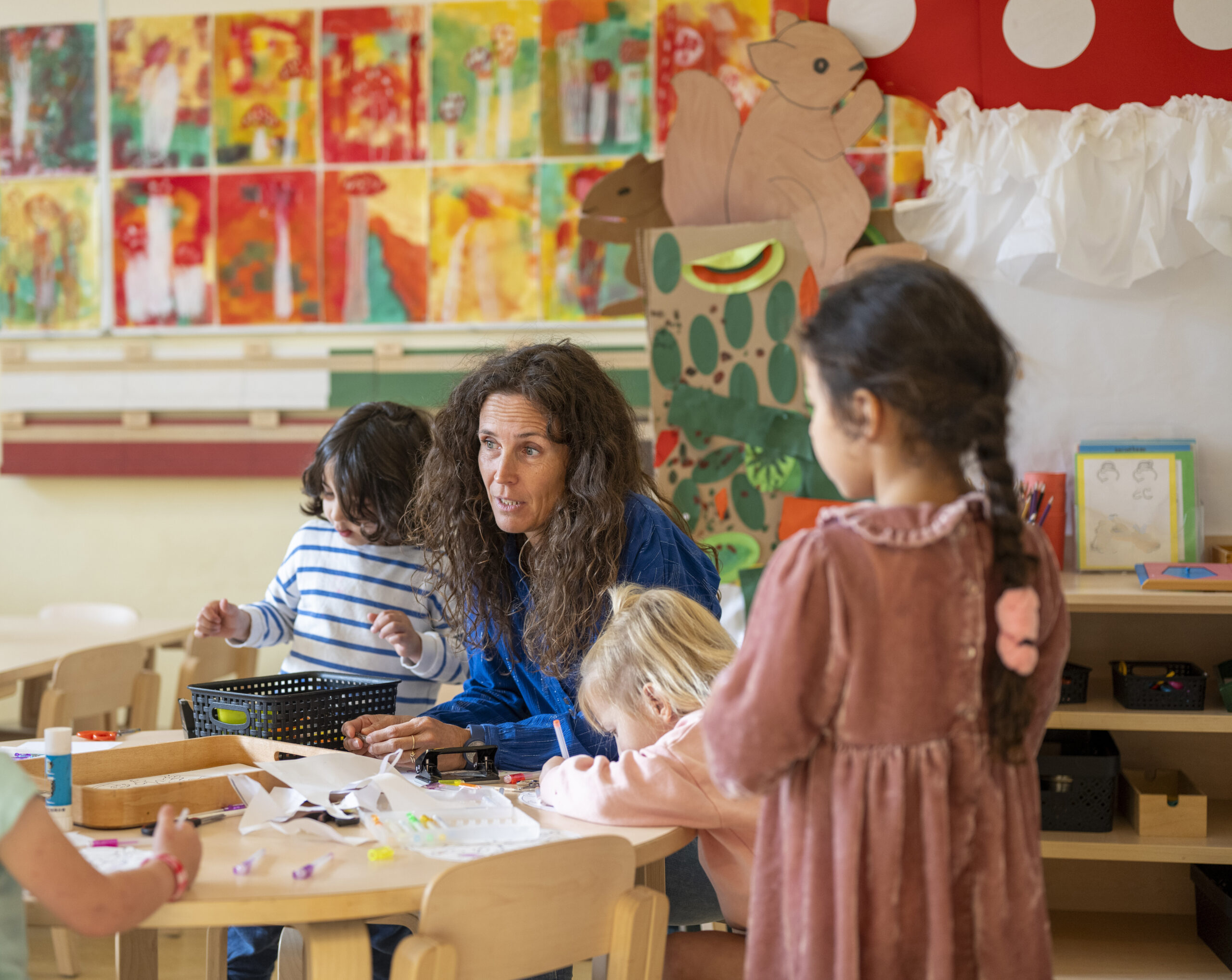
The ratio of teachers to children is arguably the single most important metric for both safety and educational quality in an early childhood setting. Low ratios mean greater supervision, reduced risk of accidents, and an increased ability for our experienced teachers to respond quickly to individual and group needs. It translates directly into better safety and more tailored education.
At Open Doors Preschool, we don’t just meet the state guidelines set by the Florida Department of Children and Families (DCF); we maintain these high standards rigorously. We strictly follow the state of Florida’s guidelines to ensure every child receives personalized attention and the best possible care.
The low ratios we maintain across the center ensure that our teachers can be present, attentive, and responsive to every child’s moment-to-moment needs.
- Infant Ratios: For our youngest learners, the infants, we ensure there is 1 teacher for every 4 babies (1:4). This allows for constant supervision, immediate response to feeding or changing needs, and plenty of individual interaction time crucial for early development.
- Toddler Ratios (One-Year-Olds): As children become more mobile, the need for immediate supervision remains high. We maintain a ratio of 1 teacher for every 6 children (1:6) for this busy age group, helping to guide their exploration safely.
- Two-Year-Old Ratios: In the two-year-old rooms, the ratio is 1 teacher for every 11 children (1:11). This stage often involves complex transitions like potty training and early group dynamics, demanding focused teacher attention.
- Older Preschool Ratios (Three- and Four-Year-Olds): For our older, more independent students, the ratio adjusts slightly to reflect their increased self-reliance and group learning capacity. Three-year-olds maintain 1 teacher for every 15 children (1:15), and four-year-olds are at 1 teacher for every 20 children (1:20).
- VPK Ratios: Our Voluntary Prekindergarten program focuses on crucial kindergarten readiness, and the state-mandated ratio here is 1 teacher for every 11 children (1:11), ensuring focused academic preparation.
What Additional Support Does the Staff Receive?
We recognize that teachers cannot be everywhere at once, especially during busy transition periods. To maximize the focus time teachers have with their students, we strategically employ dedicated support staff. These floating professionals move between classrooms as needed, specifically assisting during high-demand periods.
These high-support times are often when accidents or disruptions can occur, and our auxiliary staff helps mitigate these risks. They assist during:
- Diaper Changes and Potty Training: This allows the primary teacher to maintain direct supervision of the remaining group, ensuring classroom safety is never compromised.
- Transitions: They manage the movement of children between activities or locations (e.g., from the classroom to the playground), which can be a common time for mishaps or lost focus.
- Meal Times: They ensure all children are eating safely and help attend to individual needs, such as warming food or assisting with self-feeding, allowing primary teachers to monitor the group effectively.
This team approach guarantees that our professional, degreed, and certified teachers can dedicate their primary attention to your child’s developmental and safety needs without being overwhelmed by logistical tasks. The combination of low fixed ratios and dedicated support staff is a fundamental pillar of our quality commitment and a key differentiator of our program.
What Are the Preschool’s Essential Health and Sanitation Practices?
Maintaining a clean and sanitary environment is a critical component of preventing the spread of illness and protecting the health of children and staff. In a group setting, germs can spread quickly, so we treat sanitation not as an occasional task, but as an integrated, constant practice throughout the day.
How Are Daily Cleaning and Sanitization Protocols Managed?
Our staff follows a rigorous, scheduled, and responsive cleaning routine that goes well beyond surface-level wiping. Every single day, we work to ensure our environment is as clean as possible.
Key sanitation practices include:
- Daily Target Area Sanitization: Teachers dedicate focused time throughout every day to thoroughly sanitize high-touch surfaces. This includes:
- Tabletops and chairs used for meals and activities.
- Floors in classrooms and common areas.
- Cots/sleeping mats after naptime.
- Toys and manipulatives used during learning periods.
- Bathrooms and changing areas after every use and on a continuous schedule.
- Contingent Toy Sanitization: Our policy addresses the way young children explore the world—with their mouths! We have a specific, responsive protocol for toys. Any time a staff member observes a child mouthing a toy, that toy is immediately removed from circulation. It is placed in a designated receptacle and professionally sanitized before being returned to its proper place, preventing the transfer of germs from one child to another.
- Weekly Deep Cleaning: In addition to the continuous daily schedule, our entire center undergoes a thorough, comprehensive deep cleaning every Friday. This ensures that the environment is fully reset and exceptionally clean, providing the best possible hygienic start for every child come Monday morning.
These practices create a continually refreshed and hygienic setting, drastically reducing the environmental risks associated with contagious conditions, allowing children to focus on exploration and learning, not sickness.
What is the Illness Policy, and Why is it So Strict?
A strong illness policy is the cornerstone of community health in a group setting. While we recognize that adherence can sometimes be inconvenient for families, enforcing a strict sickness protocol is the most effective way to protect all children—including your own—and our dedicated staff. Our policy is designed to minimize the transmission of contagious conditions and maintain a stable, healthy classroom environment, maximizing learning time for everyone.
What Are the Rules for Sick Children Returning to School?
If a child exhibits symptoms of illness, they must be kept home and must meet a 24-hour symptom-free threshold before being allowed to return to the center. This rule is crucial because symptoms can sometimes mask the need for medication, and we need assurance that the child is genuinely well.
A child must be kept home and remain there if they exhibit symptoms such as:
- Fever: The child must be fever-free for a minimum of 24 hours without the use of fever-reducing medication (like Tylenol or ibuprofen). If you administered medication at 8 AM, the child cannot return until 8 AM the following day, provided they remain fever-free naturally.
- Vomiting or Diarrhea: The child must be entirely free of episodes for a minimum of 24 hours before returning.
- Contagious Conditions: This includes conditions like pink eye, severe, uncontrolled coughing, or unidentified rashes. In many cases, a doctor’s note will be required to confirm the condition is no longer contagious or is not serious.
What Happens If a Child Becomes Ill at the Center?
Should a child begin to show symptoms of illness while in our care, staff will take immediate, decisive action to protect the rest of the group and notify the family. The procedure is designed to be swift and minimize exposure.
The steps are as follows:
- Immediate Isolation: The child will be moved to a designated, supervised quiet area away from the main classroom to limit exposure to other students and teachers. This area is kept comfortable and monitored by a staff member.
- Parent Notification: Parents will be notified immediately by phone and/or through our parent portal app. We will describe the symptoms observed and the necessary next steps.
- Prompt Pick-Up Required: We rely on the vital partnership with parents to maintain a healthy center. We require and appreciate your cooperation in picking up your child as soon as possible after notification. Swift pick-up is crucial for their comfort and for the safety and health of the entire center community.
Your compliance with the 24-hour symptom-free rule is the most important factor in keeping our environment healthy for everyone, and we appreciate your support in this shared responsibility.

How Are Nutrition, Allergies, and Immunizations Handled?
Health and safety extend directly to what children eat and their overall medical readiness. We have specialized policies covering nutrition, dietary restrictions, and compliance with public health requirements to ensure holistic well-being.
How Are Children’s Nutritional Needs Met?
We recognize that nutrition is key to healthy physical and cognitive development. By providing meals in-house, we remove the daily burden of packing lunches for parents while guaranteeing high nutritional quality for students.
- Comprehensive Meal Service: We provide a full range of meals and snacks, including a nutritious breakfast, lunch, and an afternoon snack, for all children in our care.
- USDA Food Program Participation: Open Doors Preschool actively participates in the USDA Food Program. This is an important distinction, as it ensures that all our meals and snacks are nutritious, adhere to federal dietary guidelines, and are carefully planned to offer balanced, healthy options that meet the needs of growing young children.
What is the Protocol for Food Allergies and Dietary Restrictions?
The safety of children with food allergies is a paramount concern requiring clear communication and adherence to strict protocols that are constantly reinforced.
Our system for managing dietary needs is multi-layered and robust:
- Initial Enrollment Documentation: This is the critical first step. Parents must provide comprehensive details about all known food allergies, sensitivities, or dietary restrictions on the enrollment form.
- Information Sharing Chain: This crucial information is immediately and thoroughly shared with three key parties to prevent any lapse in communication:
- The program’s dedicated cook who prepares the food.
- Every teacher in the child’s specific classroom.
- Administration staff for record-keeping.
- Classroom Reference Lists: Each teacher maintains a visible, current list of all allergies and restrictions for the children in their care, serving as a constant reminder during meal and snack times.
- Alternative Meal Provision: If the regular menu contains an allergen or does not align with a child’s specific dietary requirement (e.g., vegetarian, dairy-free), we do not simply remove the item. Instead, we provide a separate, safe, and appropriate alternative meal. This alternative is always pre-approved by the parent before being served, ensuring maximum peace of mind.
This integrated system is designed to prevent cross-contamination and accidental exposure, ensuring that every meal served is safe and appropriate for your child.
What is the Open Doors Policy on Vaccinations and Records?
As a licensed early childhood facility, we strictly adhere to the public health requirements set forth by the Florida Department of Children and Families (DCF). These requirements are in place to protect the entire community.
- Required Documentation: As a condition of enrollment, we require up-to-date immunization and physical records for each child.
- 30-Day Compliance Window: These essential records must be submitted to the center within the first 30 days of enrollment.
- Maintaining Attendance: If the required documentation is not up to date within this 30-day timeframe, state guidelines necessitate that your child’s attendance must be temporarily paused until the proper records are provided. This is non-negotiable compliance with state law.
- Exemptions: We accommodate children who have medical or religious exemptions from standard vaccinations, provided the appropriate, legally required documentation is submitted and maintained on file as required by the state.
Keeping these medical records current is a vital legal requirement and a shared commitment to maintaining a safe and healthy environment for all children, particularly infants and those with compromised immune systems.
How Does Accreditation and Licensing Guarantee Quality?
The terms “licensed” and “accredited” are often used interchangeably, but they represent two distinct and equally important levels of quality assurance, both of which Open Doors Preschool meets. Achieving both demonstrates our commitment to not just meeting, but exceeding, industry standards.
What Does State Licensing Mean?
State licensing is the baseline standard for childcare operations, overseen by the Florida Department of Children and Families (DCF). Think of it as the legal minimum requirement to operate.
Licensing ensures compliance with minimum legal requirements for key operational and safety areas:
- Health and sanitation standards.
- Mandated child-to-staff ratios.
- Staff qualifications and background checks.
- Facility standards, including square footage and fire safety.
- Proper maintenance of required records.
We are a fully licensed center, meaning we meet and continuously maintain all mandatory state requirements for operating a quality childcare program in Fort Myers, FL.
What Does Gold Seal Accreditation Add?
Achieving Gold Seal accreditation signifies that a center has voluntarily chosen to exceed minimum licensing requirements. Gold Seal programs are independently verified by nationally recognized accreditation agencies, giving parents the highest level of assurance.
This higher standard ensures:
- Rigorously Evaluated Curriculum: Our program utilizes the Learning Beyond Paper curriculum, which is specifically aligned with the OEL Florida Early Learning Standards, meeting both individual and group developmental needs across all domains.
- Enhanced Staff Qualifications: Our teachers are professional, certified, and often degreed, committing to continuous training and professional development that surpasses state minimums.
- Superior Program Quality: The standards for teaching practices, parent involvement, and overall program administration are significantly higher than the state minimum, focusing on the “whole child” concept.
The Gold Seal accreditation provides parents with an extra layer of assurance that their child is receiving the highest quality early learning experience available, verified by external experts, and reflective of our long-term commitment to excellence.
Conclusion
Choosing a preschool is one of the biggest decisions a family makes, and a large part of that decision rests on feeling confident in the care provided. At Open Doors Preschool in Fort Myers, FL, our extensive and transparent health and safety policies are designed to earn and maintain that confidence every single day.
From the secured, fingerprint-verified entry system to the low teacher-to-child ratios, the rigorous 24-hour illness policy, and the dedication to USDA-approved, allergy-aware nutrition, every protocol is in place to safeguard the whole child. We are not just a building where children learn; we are a professionally supervised, Gold Seal accredited, and meticulously maintained environment dedicated to protecting the health, security, and well-being of every student who walks through our doors.
Our commitment is to transparency, quality, and the overall success of your child’s early years. We hope that decoding our policies provides you with the clarity and peace of mind you deserve when making this important choice.
Ready to provide your child with an exceptional, safe, and nurturing foundation for lifelong learning? Contact Open Doors Preschool in Fort Myers, FL, today to schedule a tour and learn more about our quality early learning programs.
Frequently Asked Questions about Our Health & Safety Policies
What is your policy on vaccinations and medical records?
We strictly follow the immunization requirements mandated by the Florida Department of Children and Families (DCF). As a required part of the enrollment process, parents must submit current, up-to-date immunization and physical records for their child within the first 30 days of attendance. If these records are not provided within that specific timeframe, your child’s attendance will need to be temporarily paused until the necessary documentation is received. We also require appropriate, legally recognized documentation if a child has a medical or religious exemption from the standard vaccination requirements.
How is unauthorized access to the facility prevented?
Security is maintained through multiple layers of control for maximum protection. All center doors remain locked at all times. Enrolled parents are provided with a private, unique access code for entry. All other visitors must be buzzed in by staff, present a valid government-issued ID, and sign a physical log before they are permitted to enter the building. Furthermore, anyone picking up a child must show ID and use our fingerprint-verified sign-out system to ensure only authorized individuals leave with a student.
How does Open Doors Preschool handle food allergies and dietary restrictions?
We take food safety very seriously and employ a strict protocol. During enrollment, parents detail all allergies or restrictions on the form, and this critical information is shared with every teacher in the classroom and with our program cook. Teachers keep a highly visible list of allergies and dietary restrictions. When the daily menu conflicts with a child’s documented needs, we provide a safe, alternative meal that has been pre-approved by the child’s parent, ensuring all dietary needs are met safely and appropriately. We also participate in the USDA Food Program, ensuring nutritious meals overall.
What specific steps are taken to keep the classrooms sanitary?
Our sanitation practices are continuous and thorough to minimize illness. Teachers sanitize all major high-touch surfaces daily, including floors, tables, cots, toys, and bathrooms. We have a specific protocol where any toy a child puts in their mouth is immediately removed from circulation and set aside for professional sanitization before being reintroduced. Additionally, the entire center undergoes a complete, comprehensive deep cleaning every Friday to maintain the highest level of hygiene.
What are the adult-to-child ratios in the classrooms?
Our ratios strictly adhere to and often exceed Florida’s state guidelines to ensure quality supervision and individualized attention. The required ratios vary by age group, starting as low as 1 teacher for every 4 infants (1:4), 1:6 for one-year-olds, and up to 1:20 for four-year-olds. We also deploy dedicated support staff who assist primary teachers during busy times like transitions and meals, ensuring that teachers can always focus their attention fully on the children’s developmental and safety needs.
