In today’s fast-paced world, the focus on early childhood education often centers on academic milestones: the ABCs, 123s, and preparing for kindergarten. While these foundational skills are undoubtedly important, at Open Doors Preschool in Fort Myers, FL, we believe that true readiness for school, and for life, goes far beyond them. We understand that a child’s social and emotional health is just as critical to their long-term success as their ability to read or count.
Social and emotional skills are the foundational building blocks that allow children to understand and manage their own emotions, build healthy relationships, and navigate the world with confidence and compassion. These are not innate traits; they are learned skills that must be nurtured and practiced daily. At our preschool, we intentionally integrate Social and Emotional Learning (SEL) into every aspect of our curriculum, ensuring that your child is developing a robust emotional toolkit alongside their academic knowledge.
This is more than just a philosophy; it’s our commitment to holistic child development. We create a warm, consistent, and supportive environment where children feel safe to explore their feelings, make mistakes, and learn from their interactions. This blog will explore the key entities and relationships within our SEL framework, delving into how our dedicated educators, thoughtfully designed activities, and supportive classroom environment all work together to empower your child with the skills they need to thrive. We’ll answer the most common questions parents have about this vital part of early education, showing you how we prepare your child for a bright, successful future.
Why is Social-Emotional Learning More Than a Buzzword?
Social and emotional learning (SEL) is the process through which children and adults acquire and apply the knowledge, skills, and attitudes to develop healthy identities, manage emotions, achieve personal and collective goals, feel and show empathy for others, establish and maintain supportive relationships, and make responsible and caring decisions. It’s not just a trend; it is the fundamental building block of a successful life. Research consistently shows that children with strong SEL skills have better academic performance, healthier relationships, and are better equipped to manage stress and challenges throughout their lives. At Open Doors Preschool, we don’t treat SEL as an add-on; it is woven into the very fabric of our daily activities, interactions, and curriculum. Our goal is to provide a comprehensive education that empowers your child to thrive both inside and outside the classroom.

How Do We Foster Self-Awareness and Emotional Literacy?
Self-awareness is a child’s ability to recognize and understand their own emotions, thoughts, and values. It is the first step toward self-regulation. We help children develop this skill through a variety of engaging, age-appropriate activities. Our educators use “feeling charts” and other visual aids to help children identify and label their emotions. For example, we might ask, “Does your face feel happy like the sun or sad like a rainy cloud?” We read stories about characters who experience big emotions, which allows children to see their own feelings reflected in a safe and relatable context. This process, known as “emotional literacy,” gives children the vocabulary they need to communicate how they are feeling, reducing the need for frustration or outbursts.
- We use mirrors and ask children to make different facial expressions.
- We use puppets to act out emotional scenarios.
- We encourage children to verbalize their feelings, saying things like, “I am feeling frustrated because my tower keeps falling down.”
- We validate all emotions, both positive and negative, to teach children that it is okay to feel what they feel.
What Is the Role of Play in Developing Self-Regulation?
Self-regulation is the ability to manage one’s thoughts, emotions, and behaviors in a calm and controlled way. It is a crucial skill for navigating social situations and focusing on tasks. At Open Doors Preschool, we understand that play is not just for fun, it is a powerful tool for developing self-regulation. Through play, children learn to take turns, wait patiently, and share materials. Games like “Red Light, Green Light” or “Simon Says” teach them to control their impulses and follow directions. Our educators guide children through these activities, providing gentle reminders and positive reinforcement. They teach simple breathing exercises, such as “smell the flower, blow out the candle,” to help children calm themselves when they feel overwhelmed. These simple techniques give children tangible tools they can use to manage their feelings and regain control.
- Turn-taking games: Board games, building blocks, and shared art projects teach patience.
- Role-playing scenarios: Children practice problem-solving and handling frustration in a low-stakes environment.
- Structured free play: Educators are present to mediate conflicts and guide children toward peaceful resolutions.
- Consistent routines: A predictable schedule helps children feel secure and reduces anxiety, making it easier for them to manage their behaviors.
How Do We Cultivate Empathy and Social Awareness?
Empathy is the ability to understand and share the feelings of others. It is the cornerstone of healthy relationships. We foster empathy by encouraging children to see situations from another’s perspective. Our educators use intentional language, asking questions like, “How do you think your friend feels when you take their toy without asking?” We read diverse books that expose children to different cultures, family structures, and experiences, helping them understand that everyone is unique and has their own story. We also celebrate acts of kindness and generosity through a “kindness jar” or a “gratitude wall,” reinforcing the positive emotional impact of helping others.
- Friendship activities: Group projects and partner work teach collaboration and social problem-solving.
- Stories and discussions: We use stories to explore themes of friendship, kindness, and understanding different perspectives.
- Community helpers: We learn about roles like firefighters, doctors, and police officers to appreciate the contributions of others.
- Modeling: Our teachers model empathetic behavior with students and with each other.
What are the key relationship-building skills we teach?
Building and maintaining positive relationships is a core part of social and emotional development. At Open Doors Preschool, we provide countless opportunities for children to practice these skills. We start with the simple act of “hello” and “goodbye” each day, teaching them to greet peers and teachers by name. We encourage cooperative play where children must work together to achieve a common goal, such as building a tall tower or completing a puzzle. Our educators also teach constructive ways to resolve conflict, such as using “I feel…” statements, taking turns to talk, and finding a compromise. We help them learn the “fair ways to play” which is a core part of the curriculum. These are not just rules to be followed; they are learned skills that empower children to be effective communicators and supportive friends.
- Cooperative play: Building a fort or creating a collaborative mural teaches teamwork.
- Sharing and turn-taking: Learning to share toys and space is a foundational social skill.
- Problem-solving: We guide children to find their own solutions to conflicts with peers.
- Expressing needs: We teach children to ask for what they want or need in a calm, clear way.
How Does Social-Emotional Development Impact Academic Readiness?
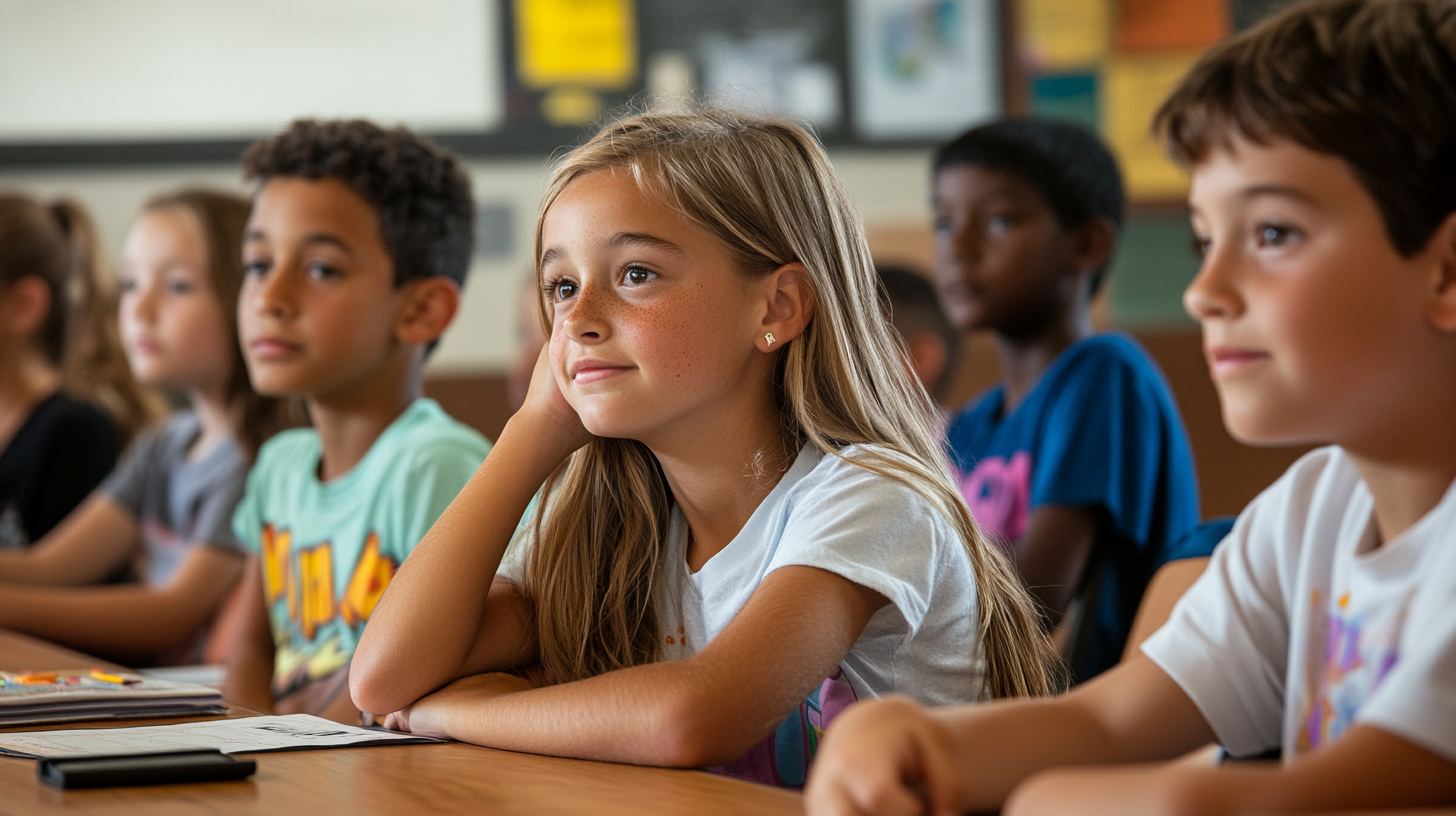
Often, parents believe that the best way to prepare their child for kindergarten is by focusing solely on academics. However, a growing body of research confirms that a child’s social and emotional health is a more significant predictor of academic success than their early reading or math skills. When children can regulate their emotions, they are more prepared to listen to instructions, follow classroom rules, and stay engaged in learning activities. When they can solve problems with their peers, they are more willing to try new things and persist through challenges. A child who feels safe, secure, and confident in their relationships is more likely to ask questions, participate in discussions, and thrive in a classroom setting. At Open Doors Preschool, we see the results every day. Our students enter kindergarten as not only academically prepared, but also as resilient, compassionate, and collaborative individuals.
Conclusion
At Open Doors Preschool, we believe that education is a holistic journey. We are dedicated to providing an environment where your child can develop academically, socially, and emotionally. By prioritizing social and emotional skills, we are not just preparing your child for the next grade; we are equipping them with the tools they need to navigate the complexities of life, build meaningful relationships, and achieve their full potential.
We invite you to learn more about our unique approach and see firsthand how our programs go beyond the ABCs to build a foundation for a lifetime of success.
Contact Open Doors Preschool today to schedule a tour and learn about our quality early learning programs. We are excited to partner with you in your child’s educational journey.
FAQs about Social and Emotional Skills in Young Children
Q: What is Social and Emotional Learning (SEL)?
A: Social and Emotional Learning, or SEL, is a key component of our curriculum that focuses on teaching children to understand and manage their emotions, develop empathy, build healthy relationships, and make responsible decisions. It is the process of acquiring and applying the skills necessary to navigate life’s challenges and opportunities effectively. At Open Doors Preschool, SEL is not a separate class but an integrated part of our daily routines, activities, and interactions. We use a variety of purposeful, play-based methods to teach these essential life skills, ensuring that every child has the tools they need to thrive both in and out of the classroom.
Q: Why is SEL so important for preschoolers?
A: The preschool years are a critical time for brain development, and a child’s social and emotional skills are foundational to their overall success. Strong SEL skills are directly linked to improved academic performance, better behavior, and healthier relationships with peers and adults. When a child can recognize and manage their emotions, they are more prepared to handle frustration, focus on learning, and work cooperatively with others. Developing these skills early on gives children a significant advantage in kindergarten and beyond, as it helps them become resilient, confident, and compassionate individuals.
Q: How do you handle conflicts between children?
A: Conflicts are a natural and important part of a child’s development, providing valuable opportunities for learning. Our educators are trained to guide children through conflict resolution in a calm and constructive manner. Instead of simply intervening or punishing, we use conflicts as a teachable moment. We help children verbalize their feelings using “I feel…” statements, listen to each other’s perspectives, and work together to find a mutually agreeable solution. For example, a teacher might say, “I see you both want the red truck. Let’s talk about how we can share it. Maybe one person can play with it for five minutes, and then you can switch.” This approach empowers children to solve their own problems and build essential communication skills.
Q: How do you involve parents in their child’s SEL journey?
A: We believe that a strong partnership between home and school is crucial for a child’s development. We provide parents with regular updates on their child’s progress, including their social and emotional milestones. We also share resources and activities that can be used at home to reinforce the skills learned at school, such as reading books about emotions or playing turn-taking games. Our educators are always available to discuss any concerns or questions you may have, and we work together as a team to support your child’s growth.
Q: What specific activities do you use to teach SEL?
A: Our curriculum is rich with activities designed to build social and emotional skills through play. We use feelings charts and emotion-focused books to help children label their feelings. Role-playing scenarios, group projects, and cooperative games teach teamwork and problem-solving. We also incorporate calming techniques like deep breathing and mindfulness exercises. Our educators are skilled at turning everyday moments into learning opportunities, from mediating a conflict over a toy to celebrating a friend’s accomplishment, every interaction is a chance to practice social and emotional skills.
