When you think about a classroom, what comes to mind? Is it rows of desks and quiet children completing worksheets? For many, this is the traditional image of education. But what if we told you that the best learning for young children often looks nothing like this? It looks like building a tower out of blocks, creating a pretend grocery store, or making a mess with paint. At Open Doors Preschool in Fort Myers, we believe that for young children, play is not a break from learning, it is the very foundation of it. This isn’t just our opinion; it’s a philosophy grounded in decades of scientific research.
In fact, neuroscientists, psychologists, and child development experts agree that a child’s brain is literally wired to learn through play. While other schools in Fort Myers may favor a more structured, academic-only approach, Open Doors Preschool champions a method that nurtures the whole child. We understand that a child who is happy, engaged, and curious is a child who is ready to learn. This blog will explore the powerful science that proves why play-based learning is the most effective approach for setting your child up for a lifetime of success.
What Is Play-Based Learning, and Is It the Same as Just Playing?
Play-based learning is a deliberate, research-backed educational approach that uses play as the primary vehicle for learning. It’s important to distinguish this from simple, aimless play. While unstructured free play is vital for a child’s development, play-based learning in an educational setting is purposeful. It’s carefully designed by educators to help children acquire specific skills and concepts through activities that are inherently joyful and engaging.
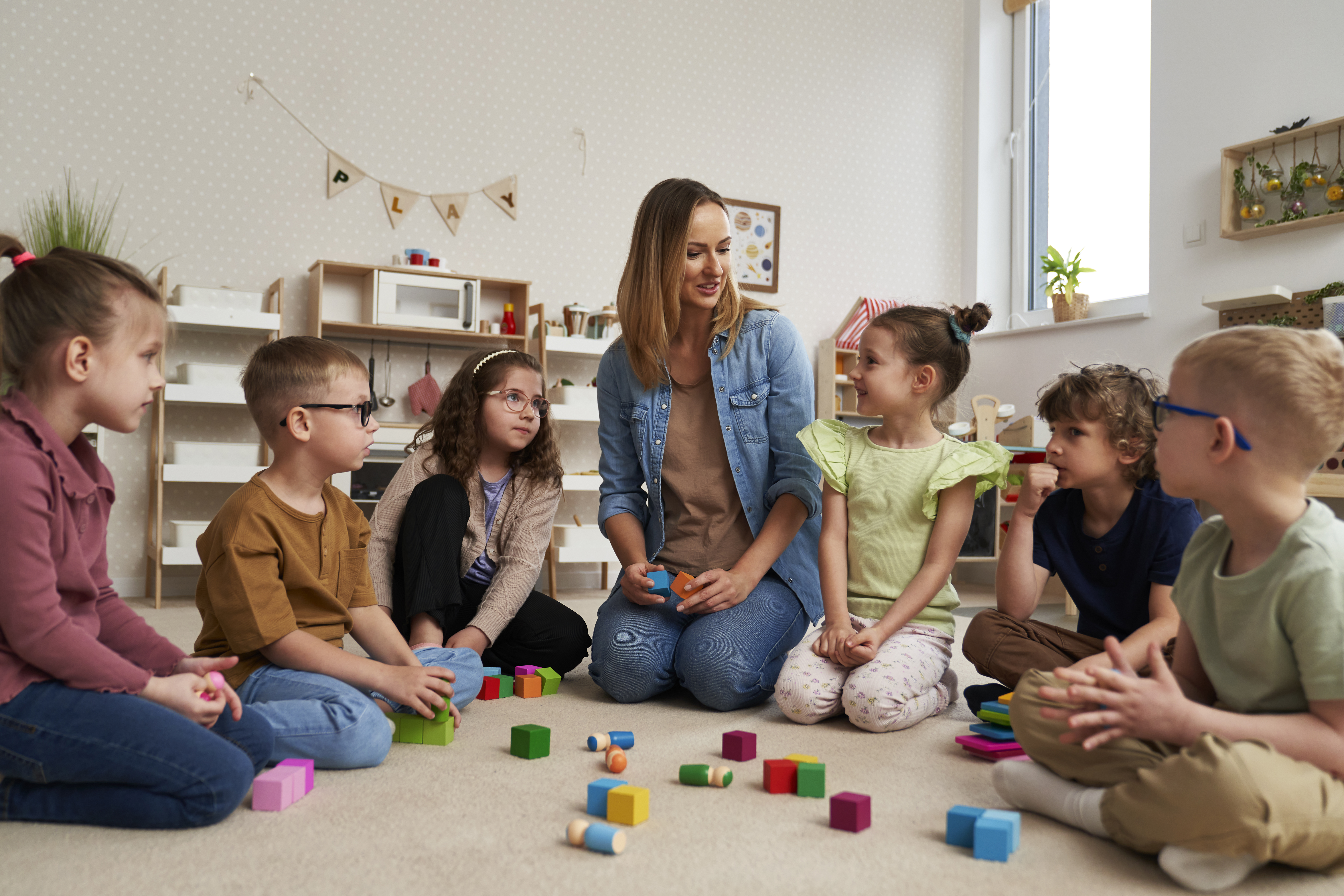
There are two main types of play within this model: free play and guided play. Free play is child-directed, where the child chooses what to do, how to do it, and with whom. Guided play, on the other hand, involves a more active role for the teacher, who observes and asks open-ended questions to extend the child’s learning. For example, a teacher might see a child building with blocks and ask, “How can you make your tower taller without it falling over?” This simple question encourages the child to think about physics and problem-solving, turning a fun activity into a powerful learning experience.
How Does Play Impact a Young Child’s Brain?
The science behind play-based learning is fascinating, and it all comes back to the brain. From birth to age six, a child’s brain develops at an astonishing rate. New neural pathways are formed at an incredible speed, and every experience helps shape the brain’s architecture. Play stimulates multiple areas of the brain simultaneously.
Activities like building, role-playing, and problem-solving activate the prefrontal cortex, which is responsible for executive functions like decision-making, self-control, and working memory. These are the skills that are directly linked to academic achievement and future success. When a child engages in make-believe play, they are not just having fun; they are creating a scenario and responding to it, which reinforces communication, problem-solving, and emotional regulation skills.
Why Is a Play-Based Curriculum More Effective Than an Academic-Only One?
In our modern, fast-paced world, there can be pressure to push children into formal academics at an early age. However, research suggests that a rigid, academic-only approach can actually be detrimental. When young children are expected to sit still and memorize information, it can lead to stress, reduced creativity, and a lack of motivation. A play-based curriculum avoids this by embedding learning goals within a playful context.
- It’s more engaging: Children are naturally curious. A play-based environment harnesses that curiosity and makes learning a joyful experience. When children are having fun, they are more likely to retain information and develop a positive attitude toward school.
- It’s holistic: Play supports the development of the whole child—intellectually, socially, emotionally, and physically. An academic-only approach often neglects the crucial social and emotional skills that are necessary for success in school and in life.
- It’s a better predictor of success: Studies have shown that children who are able to engage in rich, imaginative play in preschool are more likely to perform better academically later on. Play helps them develop a deep, lasting understanding of complex concepts in a way that rote memorization cannot.
How Does Play-Based Learning Foster Cognitive Development?
Through play, children learn to think critically, solve problems, and understand the world around them. These activities are the building blocks of cognitive development. Consider the following examples:
- Building blocks: When a child builds a tower, they are not only working on their fine motor skills but also learning about balance, gravity, and spatial awareness. They are practicing logic and basic principles of physics.
- Dramatic play: When a child pretends to be a doctor, a chef, or a parent, they are learning about social roles, empathy, and communication. They are practicing vocabulary and learning to understand different perspectives.
- Manipulative play: Puzzles, clay, and other materials help children with fine motor skills, which are essential for tasks like writing. They also teach children about patterns, shapes, and problem-solving.
- Literacy and numeracy: Teachers can seamlessly integrate these skills into play. For instance, children can count the number of toy animals they have or write a menu for a pretend restaurant. This makes learning meaningful and relevant to the child’s world.
In What Ways Does Play Improve Social and Emotional Skills?
One of the most significant benefits of play-based learning is its impact on a child’s social and emotional development. The classroom becomes a safe space where children can practice interacting with their peers and navigating complex emotions.
- Cooperation: When children work together to build a fort or put on a puppet show, they learn to collaborate, share ideas, and compromise.
- Conflict resolution: Disagreements are a natural part of play. A teacher can use these moments as a teaching opportunity, guiding children to talk through their feelings and find a solution together.
- Empathy: Role-playing and shared imaginative play help children understand the feelings and perspectives of others. They learn to be kind and considerate classmates.
- Confidence and resilience: As children master new skills and overcome challenges during play, they build self-esteem and confidence. They learn to try again when things don’t go as planned, a crucial life skill.
What Is the Teacher’s Role in a Play-Based Classroom?
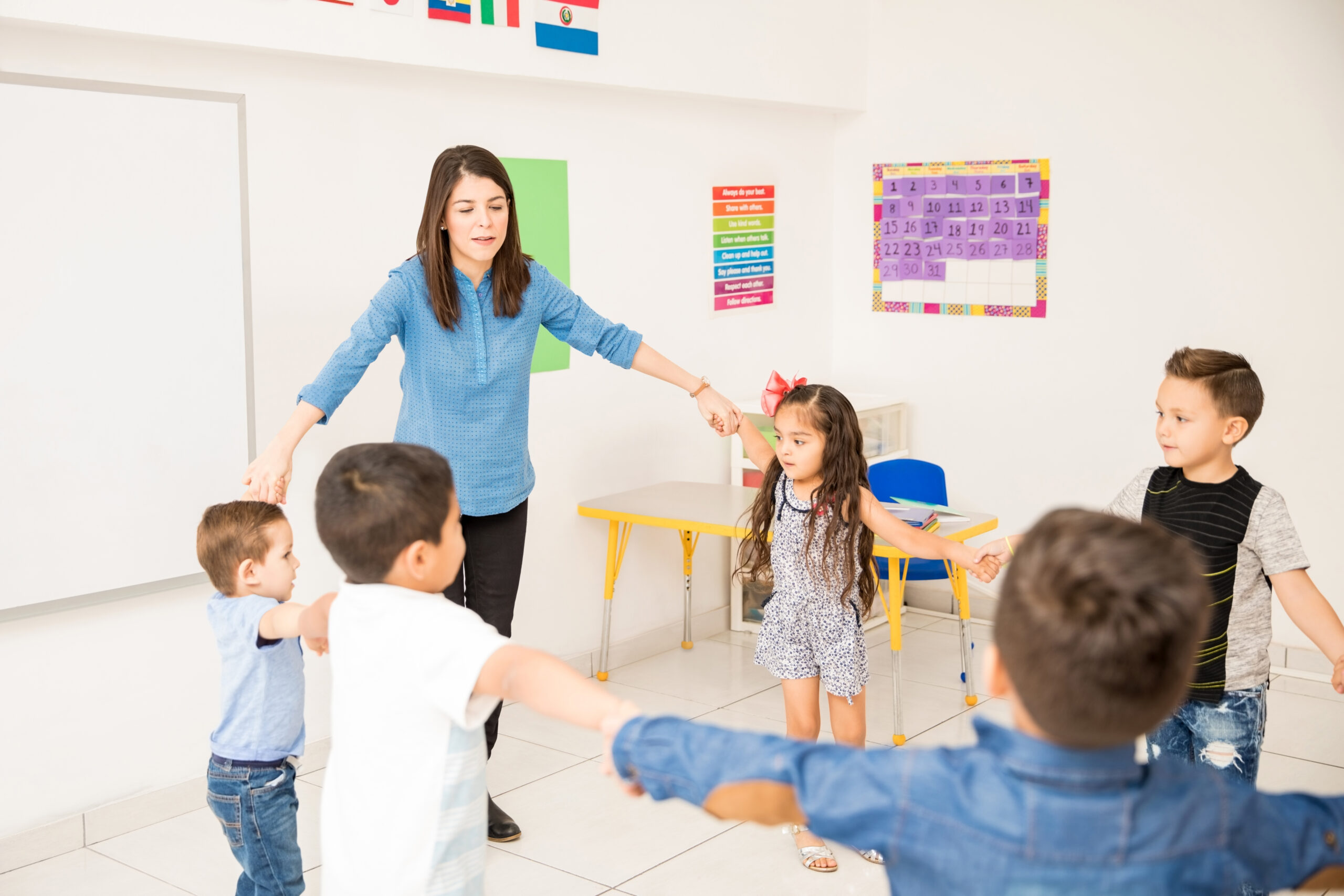
In a play-based classroom, the teacher is not a lecturer but a facilitator. They are a “guide on the side,” not a “sage on the stage.” At Open Doors Preschool, our certified teachers are experts in child development. They create a rich and stimulating environment that encourages exploration.
Their work involves several key actions:
- Observation: Teachers carefully observe children’s play to understand their interests and what skills they are practicing.
- Guidance: They introduce new materials or challenges to extend learning opportunities.
- Interaction: They ask open-ended questions that stimulate critical thinking and encourage communication.
- Support: They offer gentle guidance and support, helping children navigate challenges and master new skills.
This thoughtful approach ensures that every moment of play is a learning opportunity.
Conclusion: Why Choose Open Doors Preschool?
At Open Doors Preschool in Fort Myers, we don’t just believe in play-based learning; we live it every day. We understand that early childhood is a critical phase of development, and we are committed to providing a nurturing environment where your child can thrive. Our curriculum is designed to balance purposeful play with the academic fundamentals needed for future success. We are dedicated to helping your child grow into a happy, healthy, and confident learner.
By choosing Open Doors Preschool, you are choosing a school that prioritizes your child’s natural curiosity and well-being. You are choosing a place where learning is an adventure, and every day is filled with discovery and fun. We invite you to see the magic of our play-based approach for yourself.
To learn more about our high-quality early learning programs and to schedule a tour, please contact Open Doors Preschool today.
FAQs about Play-Based Learning in Fort Myers
Q: What is the main difference between play-based learning and traditional teaching?
A: Traditional teaching often relies on direct instruction, memorization, and structured lessons, where a teacher presents information and children receive it. Play-based learning, in contrast, is an active, child-centered approach. It uses purposeful, hands-on play as the primary method for learning. While a teacher still guides the activities, the focus is on a child’s natural curiosity and engagement, helping them develop skills in a more holistic and meaningful way.
Q: How does play-based learning prepare my child for kindergarten?
A: Play-based learning is an excellent way to prepare children for kindergarten and beyond. It doesn’t just focus on academic skills like letters and numbers; it also develops crucial social, emotional, and cognitive skills. Through play, children learn to problem-solve, collaborate, communicate effectively, and manage their emotions. These “soft skills” are what truly prepare a child for a successful transition to a more formal academic environment.
Q: Is there any academic instruction in a play-based curriculum?
A: Yes, a high-quality play-based curriculum, like the one at Open Doors Preschool, balances play with direct instruction. Academic concepts are not ignored; they are simply integrated into a playful context. For example, a math lesson might involve counting items in a pretend grocery store, or a literacy lesson could be centered on writing a list for a scavenger hunt. This approach makes learning meaningful and enjoyable, ensuring children develop strong academic fundamentals without the stress of rote memorization.
Q: Do teachers in a play-based classroom just let children do whatever they want?
A: No, that is a common misconception. In a play-based classroom, the teacher’s role is essential. They act as facilitators who carefully design the environment and activities. They observe the children’s interests and ask probing questions to extend their learning. The teacher’s guidance turns “just playing” into “purposeful learning.”
Q: What kind of play activities will my child be involved in at Open Doors Preschool?
A: Our program offers a wide range of engaging play activities, including but not limited to:
- Dramatic Play: Role-playing real-world scenarios like a doctor’s office or a restaurant.
- Sensory Play: Exploring materials like sand, water, or clay to develop fine motor skills and sensory awareness.
- Art & Music: Engaging in “process art” where the focus is on creativity and self-expression, as well as interactive music activities.
- Outdoor Play: Climbing, running, and exploring nature to build gross motor skills and a connection to the environment.
Building & Manipulative Play: Using blocks and puzzles to enhance spatial awareness and problem-solving abilities.
